 EN
EN


Why Do VFD Motors Cause Bearing Damage?
Quick Answer
Variable Frequency Drives (VFDs) can create shaft voltage due to high-frequency switching inside the inverter. When this voltage builds up, electrical current may discharge through motor bearings. Over time, these repeated discharges damage the bearing surfaces, leading to pitting, noise, vibration, and premature failure. Installing a shaft grounding ring can redirect the current safely to ground and prevent bearing damage.
The Growing Use of VFD Motors
Variable Frequency Drives are widely used to improve energy efficiency and control motor speed. They are common in industrial systems such as pumps, compressors, HVAC equipment, and conveyor systems.
However, many engineers notice an unexpected issue after installing VFD systems: motor bearings begin to fail much earlier than expected.
This problem is not caused by poor lubrication or mechanical overload. In many cases, the real cause is electrical damage inside the bearing.
How VFDs Create Shaft Voltage
Unlike traditional power supplies that deliver smooth sinusoidal voltage, VFDs regulate motor speed using pulse width modulation (PWM). This method rapidly switches voltage on and off at high frequencies.
During this switching process, a phenomenon called common-mode voltage is generated.
This voltage can induce electrical potential between the motor shaft and the motor frame. As the motor runs, the shaft voltage gradually increases.
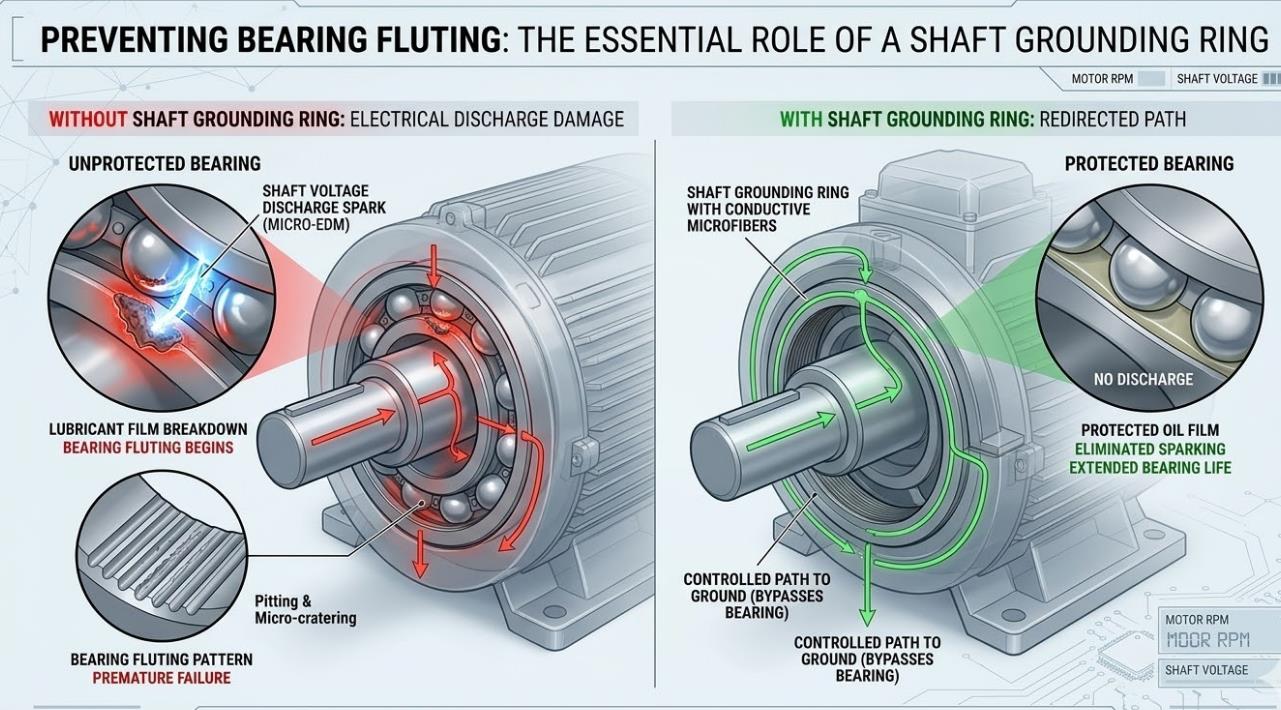
Once the voltage becomes strong enough to break through the thin lubricant film inside the bearing, electrical discharge occurs.
What Happens Inside the Bearing
Each discharge is extremely small, but it behaves like a microscopic spark between metal surfaces.
Thousands of these sparks can occur every second during motor operation.
Over time, this repeated electrical activity causes several types of damage:
● Pitting – small craters on the raceway
● Frosting – a dull gray worn surface
● Fluting – evenly spaced grooves along the bearing track
Increased vibration and noise
Studies in industrial motor systems suggest that electrical bearing damage can account for a large percentage of premature failures in VFD-driven motors.
Preventing the Problem with Shaft Grounding Rings
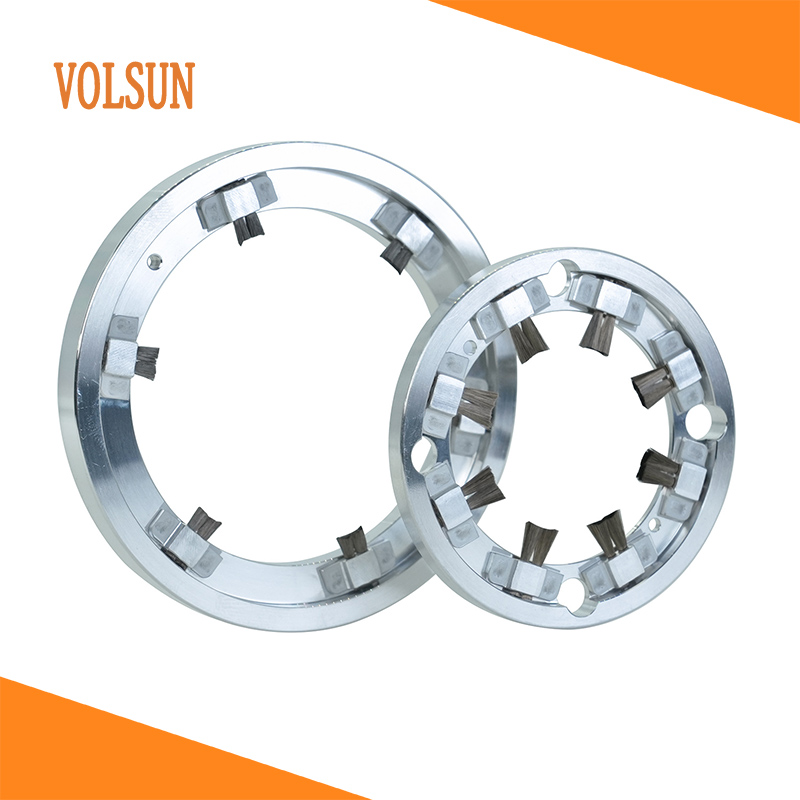
A shaft grounding ring protects the bearing by providing a controlled electrical path to ground. Instead of allowing voltage to discharge through the bearing, the grounding ring diverts stray current from the rotating shaft directly to the motor frame.
The shaft grounding ring uses conductive microfibers that maintain continuous contact with the shaft while the motor rotates. Because the grounding ring offers a lower resistance path than the bearing, the electrical current naturally flows through it instead.
A Simple Preventive Solution
For many modern motor systems, electrical bearing damage is not immediately visible until failure occurs. By installing a shaft grounding ring early in the system design, engineers can reduce the risk of premature bearing damage and improve long-term motor reliability.
FAQ
1.Why do VFD motors cause bearing current?
High-frequency switching in VFDs generates common-mode voltage that can induce shaft voltage, which may discharge through motor bearings.
2.Can lubrication prevent electrical bearing damage?
No. Lubrication protects against mechanical wear but cannot stop electrical discharge.
3.What is the most common protection method?
Shaft grounding rings are widely used because they safely divert stray current away from the bearing.