 EN
EN


Silicone Rubber Fiberglass Sleeve for EV High-Voltage Wire Harness Protection
As electric vehicles move from 400V to 800V platforms, high-voltage wire harnesses face greater demands for electrical insulation, heat resistance, and mechanical protection. At the same time, limited space inside battery packs and continuous vibration around drive motors make wire protection even more challenging. Silicone rubber fiberglass sleeves provide a practical solution by combining electrical insulation with strong mechanical protection in one flexible structure.
A Composite Structure for Reliable Insulation
A silicone rubber fiberglass sleeve consists of an alkali-free fiberglass braided layer coated with silicone rubber. Each material plays a different role.
The fiberglass braid acts as the mechanical reinforcement, providing high tear strength and helping the sleeve maintain its integrity during installation and long-term mechanical stress. For Volsun silicone rubber fiberglass sleeves, specifications above Φ4.0 mm achieve a measured tear strength of 50 N/mm.
The outer silicone rubber layer provides electrical insulation. By adjusting the sleeve wall thickness, different voltage withstand levels can be achieved. For example, the Φ4.0 mm sleeve with a 0.5 mm wall thickness can achieve a breakdown voltage above 7,000V, providing a significant insulation margin for high-voltage applications.
Built for High Temperature and Vibration
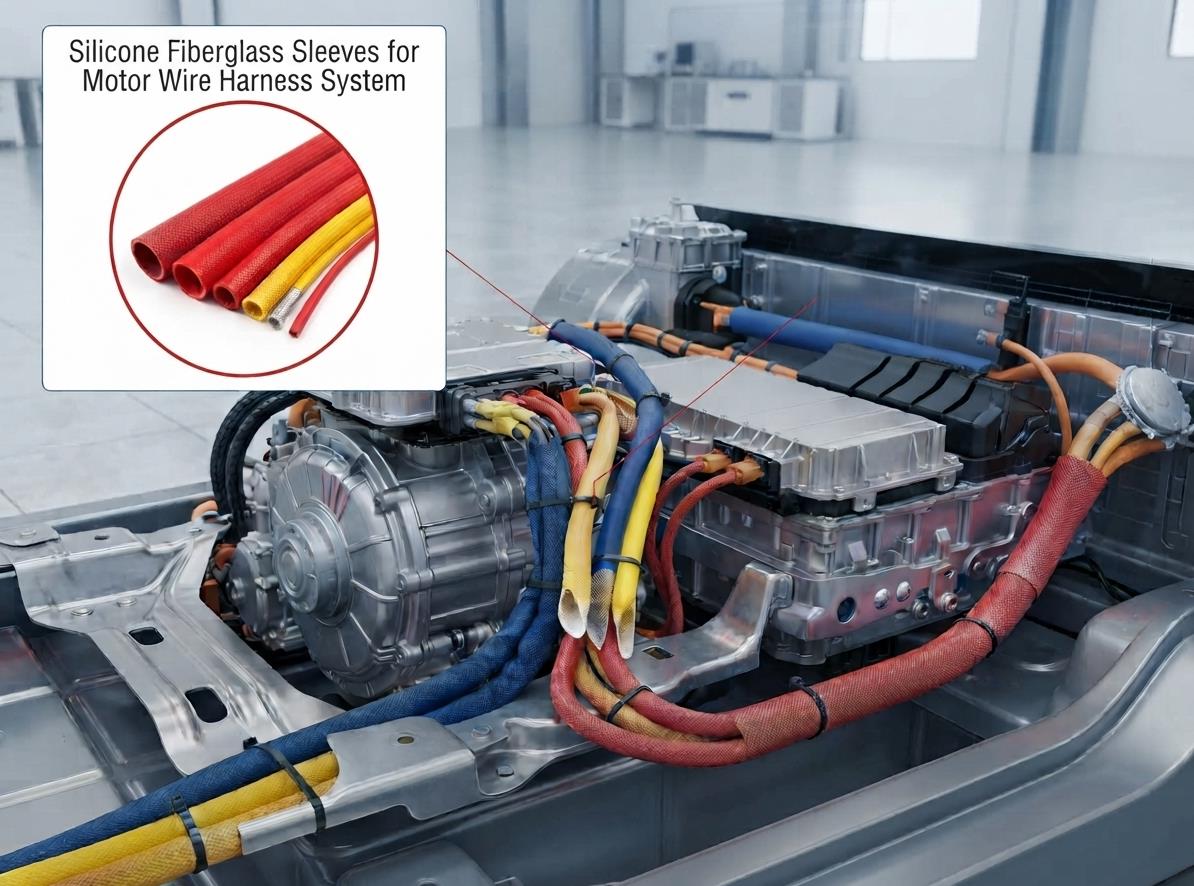
The wiring around EV drive motors can be exposed to temperatures above 150°C, while continuous motor operation also creates high-frequency vibration and mechanical movement.
Volsun silicone rubber fiberglass sleeves have an operating temperature range of -40°C to +200°C. The sleeve maintains its performance during both low-temperature and high-temperature conditions, making it suitable for demanding environments around electric motor wire harnesses.
The fiberglass braided reinforcement also helps protect the insulation from mechanical stress. When wire harnesses repeatedly move against brackets or surrounding components, the reinforced structure helps reduce the risk of tearing or insulation damage.
Thin-Wall Protection for Compact Battery Packs
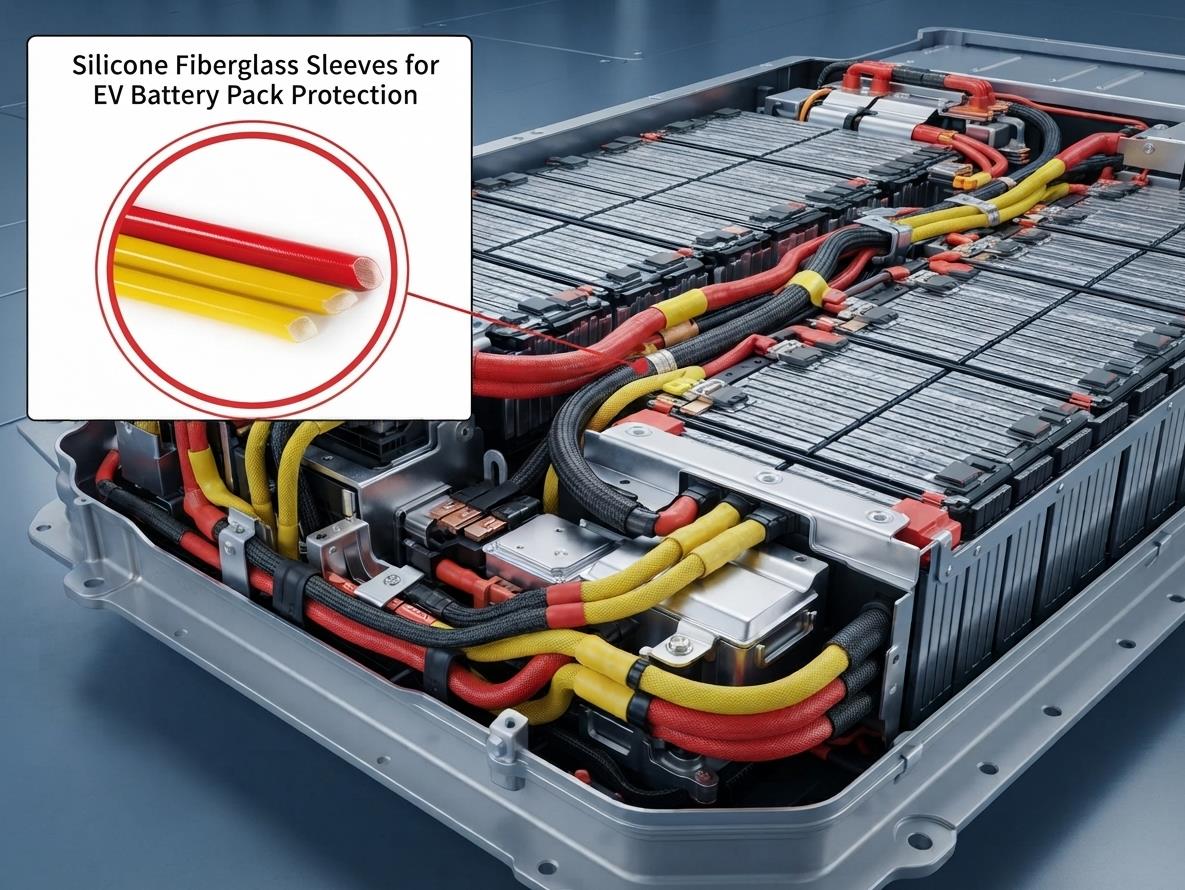
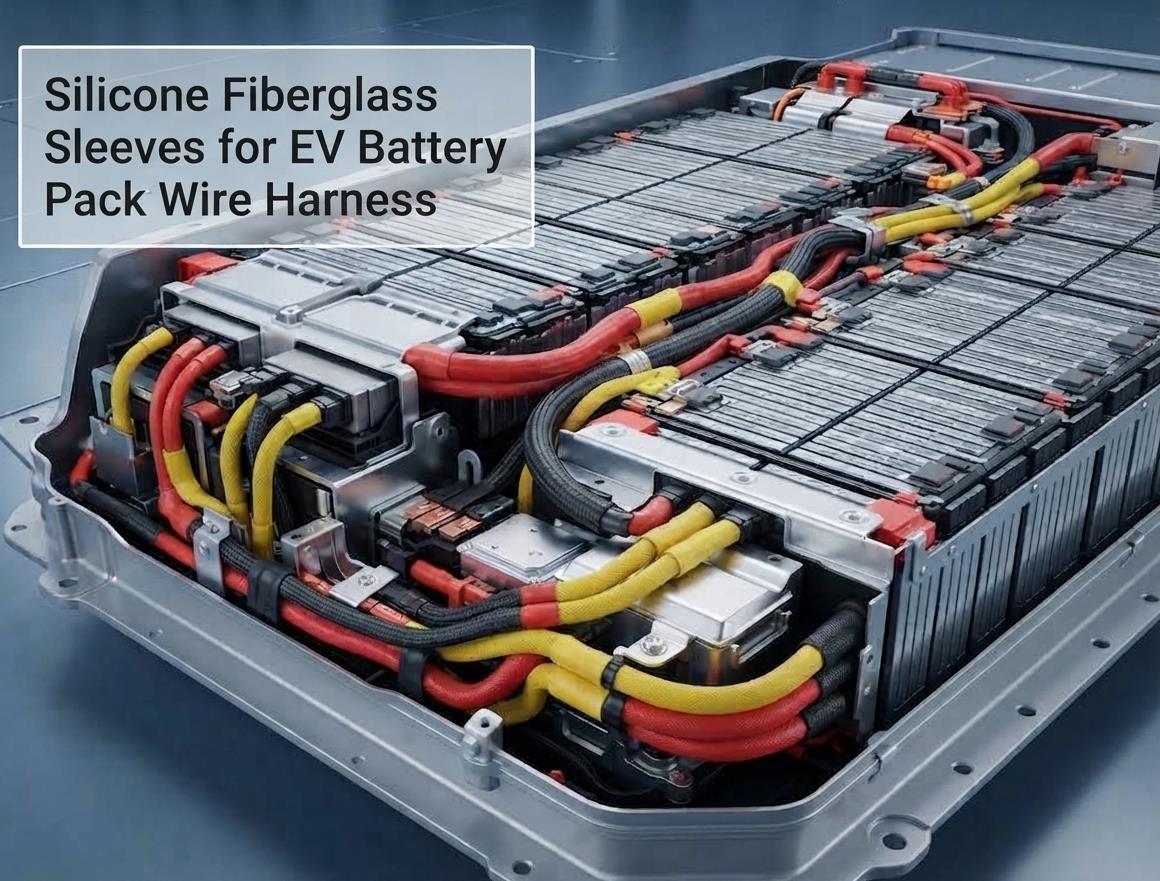
Space is another important consideration in EV battery systems. High-voltage harnesses are often arranged closely together, leaving only a small amount of clearance between cables and surrounding components.
Volsun silicone rubber fiberglass sleeves are available with wall thicknesses from 0.35 mm to 1.05 mm, helping engineers balance insulation performance with limited installation space. The fiberglass reinforcement provides additional resistance to wear and penetration caused by long-term friction between harnesses, brackets, and other components.
Flexible Specifications for Different EV Applications
Electric vehicle wiring systems include everything from sensor wires and signal cables to high-voltage power cables. Their insulation requirements can vary significantly.
Volsun silicone rubber fiberglass sleeves cover inner diameters from Φ2.0 mm to Φ25.0 mm, with different wall thicknesses and voltage withstand levels of 1500V, 2500V, 4000V, and 7000V. Custom colors, including transparent, white, black, red, yellow, blue, green, and orange, are also available for easier wire harness identification.
For EV manufacturers and component suppliers, the right fiberglass sleeve is not simply an insulation layer. It needs to provide electrical protection while also handling heat, vibration, friction, and limited installation space. With its silicone rubber and fiberglass composite structure, Volsun provides a versatile high-voltage wire harness protection solution for new energy vehicle applications.