 EN
EN


Silicone Cold Shrink vs. EPDM Cold Shrink Tubing: How to Choose the Right Material for Your Cable Sealing Project
When protecting cable connections, coaxial joints, and electrical splices from moisture and environmental damage, cold shrink tubing is the go-to solution for field engineers. By simply pulling out a removable plastic core, the sleeve contracts automatically around the cable without requiring heat guns or open flames. However, when specified for a project, you will quickly face a key technical choice: Silicone Rubber or EPDM Rubber?
While both materials deliver IP68-rated waterproof protection, their physical and chemical profiles differ significantly. Choosing the right material ensures long-term reliability and prevents over-specifying project costs.
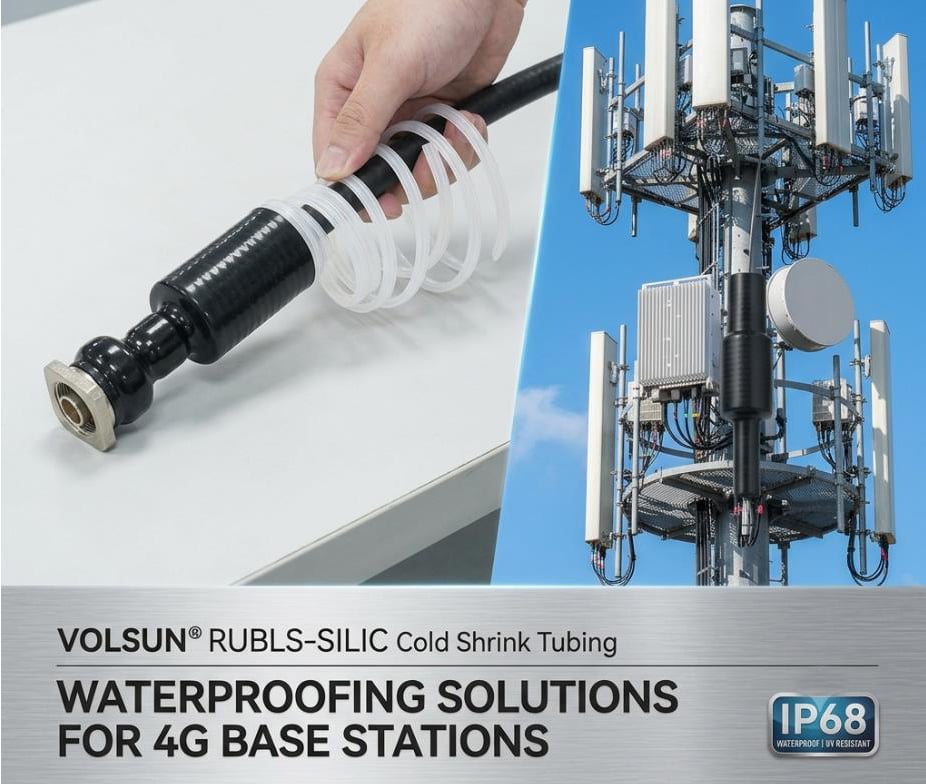
Silicone Cold Shrink: The Choice for Extreme Weather & High Expansion
Silicone cold shrink tubing (such as Volsun’s RUBLS-SILIC) is engineered for high-altitude, extreme-temperature, and UV-heavy environments.
· High 5:1 Shrink Ratio: Silicone offers an exceptional expansion ratio of approximately 5:1 and an elongation at break exceeding 910%. This flexibility allows a single sleeve size to bridge drastic diameter transitions—such as sealing a thick connector housing down to a slim jumper cable.
· Extreme Temperature Window: Operating continuously from -60C to 200C, silicone remains flexible in arctic freezes and won't degrade under blistering desert heat.
· UV & Tear Resistance: With a high tear strength of 50 kN/m, small surface cuts won't propagate under tension. Certified to withstand 1,000 hours of Damp Heat (85C / 85RH) and ASTM G154 UV aging, it is the top choice for 5G telecom towers, solar farms, and high-voltage substation connections.
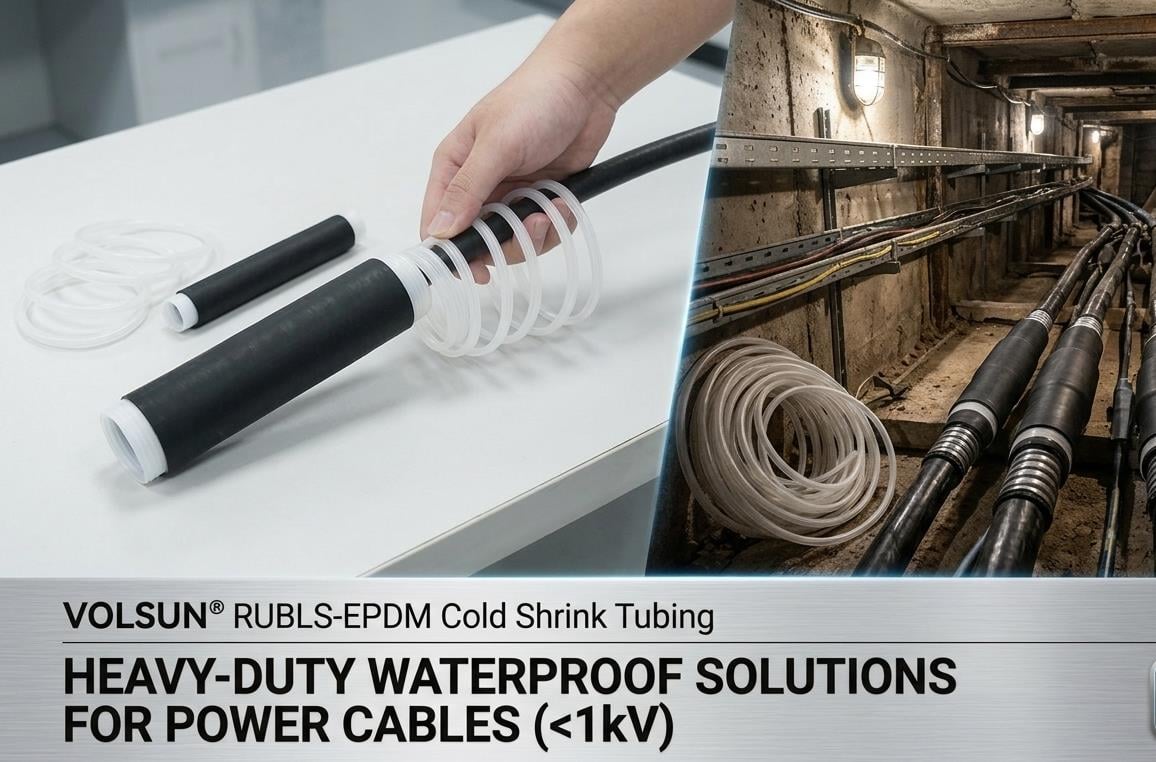
EPDM Cold Shrink: Built for Tough Handling & Acid-Alkali Defense
EPDM (Ethylene Propylene Diene Monomer) cold shrink tubing (such as Volsun’s RUBLS-EPDM) excels when physical durability and chemical defense are paramount.
· Abrasion & Puncture Resistance: EPDM is physically tougher than silicone, offering superior resistance against mechanical wear, sharp rocks, and rough handling during installation.
· Acid & Alkali Defense: EPDM boasts excellent chemical stability, making it highly resistant to acids, alkalis, and salty groundwater.
· Dynamic Breathing Seal: Designed for low-voltage power cables (below 1kV), EPDM maintains a strong, elastic radial pressure. It synchronizes with the thermal expansion and contraction of the cable and maintains a tight seal even under wind sway or underground cable movement. It is ideal for direct-buried conduits, marine environments, and industrial plant wiring.
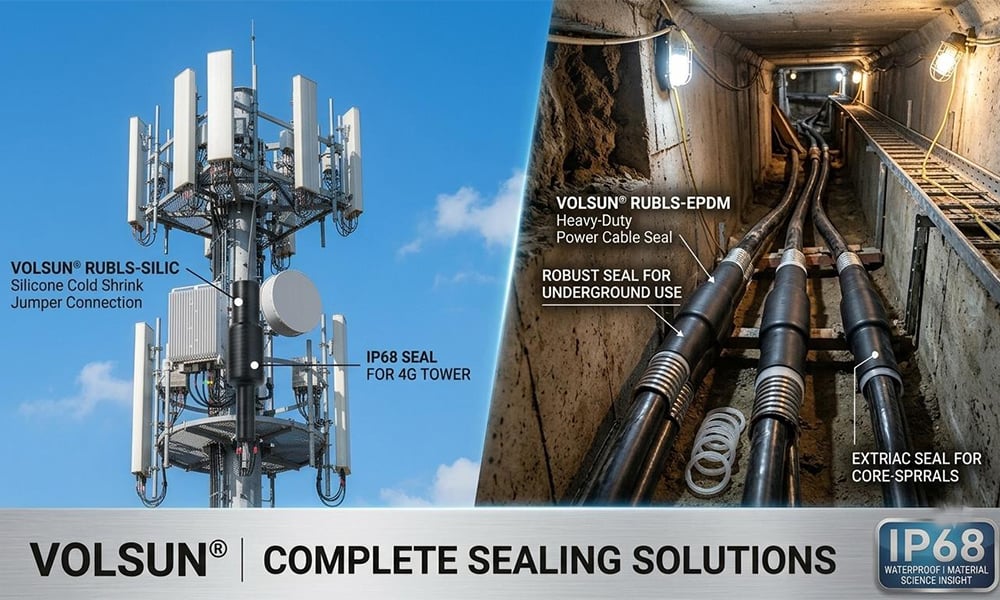
Quick Decision Guide
1. Choose Silicone (RUBLS-SILIC) if your project involves:
· 5G telecom jumpers, RF coaxial connectors, or broad diameter transitions.
· Extreme hot or cold ambient temperatures (-60C to 200C).
· Strong sunlight exposure, high UV radiation, or high dielectric isolation requirements (21.6 kV/mm).
2. Choose EPDM (RUBLS-EPDM) if your project involves:
· Low-voltage power cables (<1kV) installed underground or in cable trenches.
· Environments with acidic/alkaline soils, harsh chemical exposure, or heavy physical abrasion risks.
· Overhead wires subject to continuous wind sway and vibration.
Both Silicone and EPDM cold shrink tubes provide reliable, heat-free waterproofing. By matching the material's core strengths—silicone’s temperature resilience and 5:1 expansion versus EPDM’s tough puncture and chemical defense—you can ensure your cable joints remain sealed and operational for years to come.