 EN
EN


How to Choose a Silicone Thermal Pad: Thermal Conductivity, Thickness & Hardness Explained
Choosing a silicone thermal pad comes down to three numbers: thermal conductivity (how fast heat moves), thickness (the gap you must fill), and hardness (how easily it conforms). Get these right and cooling is reliable; get them wrong and you either overheat the part or cannot seat the heatsink. This guide explains each factor and gives you a workflow you can apply to any design. Most thermal failures we see trace back to one of these three being mismatched, so a few minutes of specification up front saves a costly redesign later.

1. Thermal Conductivity (W/m·K)
This is the pad's ability to conduct heat. VOLSUN's standard series runs 1.5 to 6.0 W/m·K. Higher means better heat transfer — but also a stiffer, more brittle pad that needs more clamping pressure. Pick the lowest conductivity that meets your thermal budget, not the highest number on the shelf.
| Grade | Thermal conductivity | Typical use |
| GP1501 | 1.5 W/m·K | Low-power, cost-sensitive cooling |
| GP2001 | 2.0 W/m·K | General electronics |
| GP3001 / GP3001-PI | 3.0 W/m·K | Mid-power modules, PI option for reinforcement |
| GP4001 | 4.0 W/m·K | Power devices |
| GP6001 | 6.0 W/m·K | High-power IGBT, dense packs |
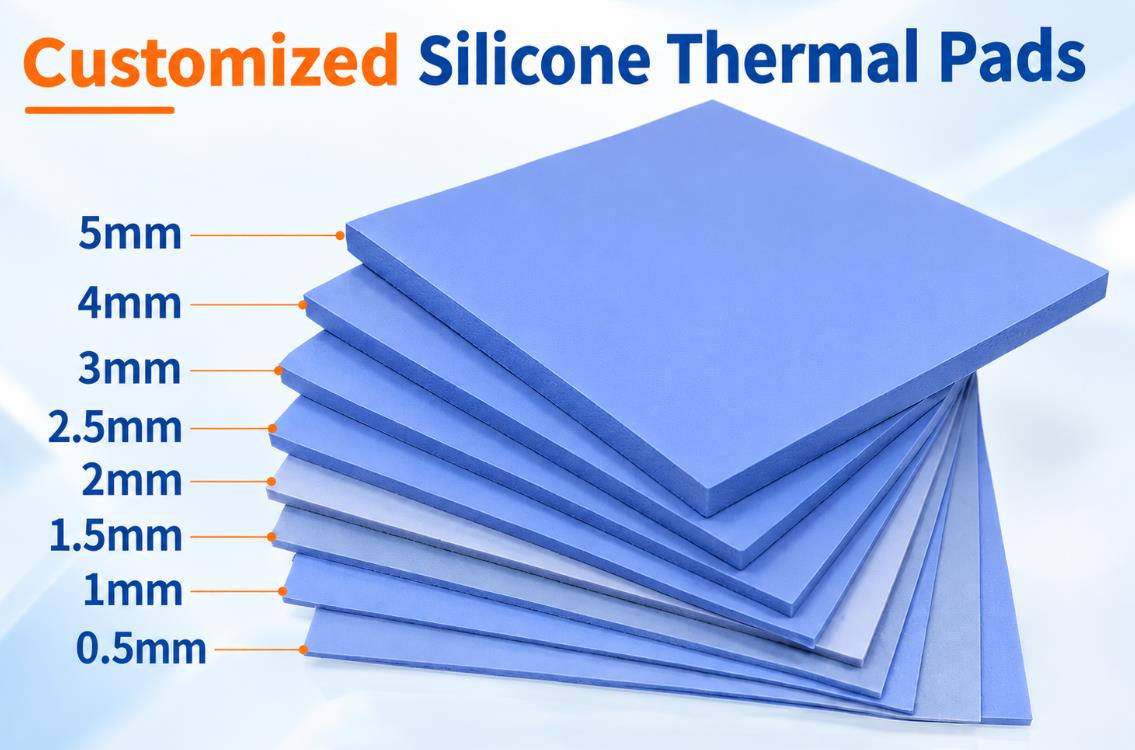
2. Thickness (mm)
Standard pads span 0.5–5.0 mm. The pad must be at least as thick as the largest gap between the component and the heatsink. Too thin and air remains; too thick and you add thermal resistance and may not close the assembly. Measure the gap with the worst-case tolerance, then choose thickness with margin.
3. Hardness (Shore OO)
Hardness decides how well the pad conforms to uneven surfaces. VOLSUN standard grades sit around 30–70 Shore OO; the ultra-soft GP1002-SI is below 10. Softer pads conform with less pressure and tolerate warped parts; harder pads suit stable, high-pressure clamps where shape retention matters.
Other Specs to Check
· Flame rating — all VOLSUN pads are V-0.
· Operating temperature — standard −40 °C to +200 °C; GP1002-SI rated to −60 °C.
· Electrical insulation — volume resistivity ≥10¹² Ω·cm, dielectric >6 kV/mm.
· Compliance — RoHS, REACH.
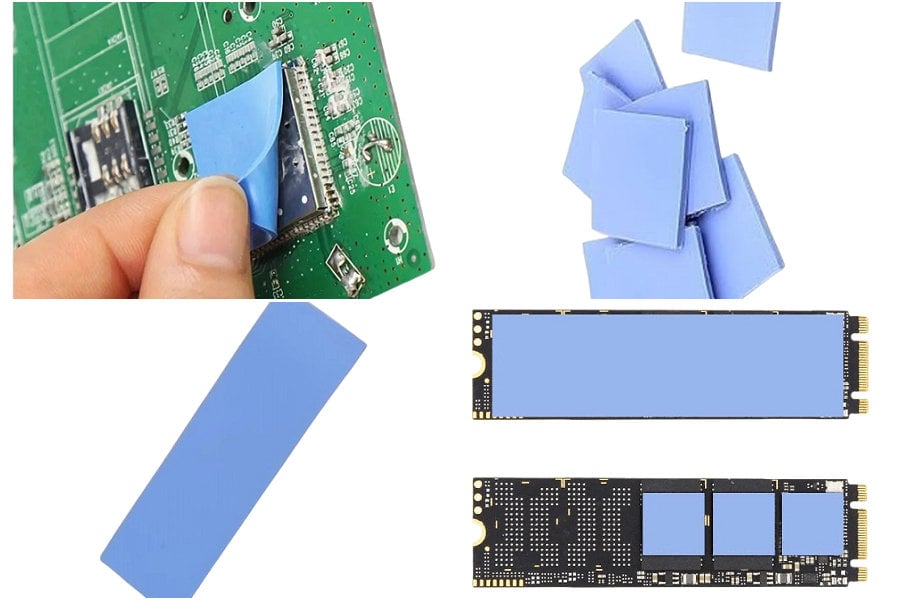
A Simple Selection Workflow
1. Measure the gap (with tolerance) → sets thickness.
2. Estimate the heat load → sets the minimum thermal conductivity.
3. Check surface flatness and clamp pressure → sets hardness.
4. Confirm temperature range and flame/isolation needs.
5. Match the grade from the table above.
Thermal conductivity and other figures are typical values from standard tests; real performance depends on contact pressure, surface flatness, and gap. Remember that higher W/m·K grades are stiffer and more brittle — they need more assembly pressure, so "highest number" is rarely the best choice.
VOLSUN Product Match
· GP1501 → GP6001 — 1.5 to 6.0 W/m·K standard series covering most designs.
· GP3001-PI — 3.0 W/m·K with a polyimide-reinforced surface for handling strength and isolation.
· GP1002-SI — ultra-soft (<10 Shore OO), −60 °C rated, customizable color for tight gaps and cold environments.
In conclusion, start with thickness from your gap, conductivity from your heat load, and hardness from your clamp. Keep the margin sane and you will never overheat or fight the assembly. Need a second opinion on your numbers? Contact the VOLSUN team for samples.