 EN
EN


The Risks of Motor Shaft Currents and How Shaft Grounding Rings Solve the Problem
As industrial motors, EV drive systems, rail transit motors, and inverter-driven equipment become more widely used, the issue of shaft current damage is receiving increasing attention. Many motor failures that appear to be “bearing quality problems” are actually caused by hidden electrical discharge inside the motor system.
So, what exactly causes shaft currents? Why are they harmful? And how can a shaft grounding ring help protect your equipment?
What Causes Shaft Currents in Motors?
Shaft current refers to unwanted electrical current flowing through the motor shaft and bearings during operation. In modern variable frequency drive (VFD) systems, shaft currents are especially common.
There are several main causes:
1. Electromagnetic Imbalance Inside the Motor
When the magnetic field inside the motor is uneven — caused by manufacturing tolerances, rotor eccentricity, or stator asymmetry — a voltage difference can form between the shaft and the motor housing. Once the voltage exceeds the insulation strength of the bearing grease film, electrical discharge occurs through the bearing.
2. High-Frequency Voltage from Variable Frequency Drives (VFDs)
VFDs improve motor efficiency and speed control, but they also generate high-frequency common-mode voltages. These voltages can induce shaft voltage on the rotating shaft. When accumulated voltage becomes too high, it discharges through the bearings, creating electrical pitting and fluting damage.
This is one of the most common causes of premature bearing failure in inverter-driven motors.
3. Poor Grounding or Static Electricity Accumulation
Improper grounding, loose grounding connections, or excessive static electricity can also contribute to shaft current generation. In high-speed rotating systems, static charge may build up continuously and eventually discharge through the bearing path.
External electromagnetic interference and unstable power systems can further increase shaft current risks.
Many companies only discover shaft current problems after motor failures occur. However, the damage often starts much earlier. In severe cases, shaft current damage can lead to complete motor shutdown, affecting production efficiency and equipment reliability.
Industries such as electric vehicles, rail transportation, wind power, industrial automation, and heavy-duty motors are particularly vulnerable because of continuous operation and widespread VFD usage.
Volsun Shaft Grounding Ring Solution
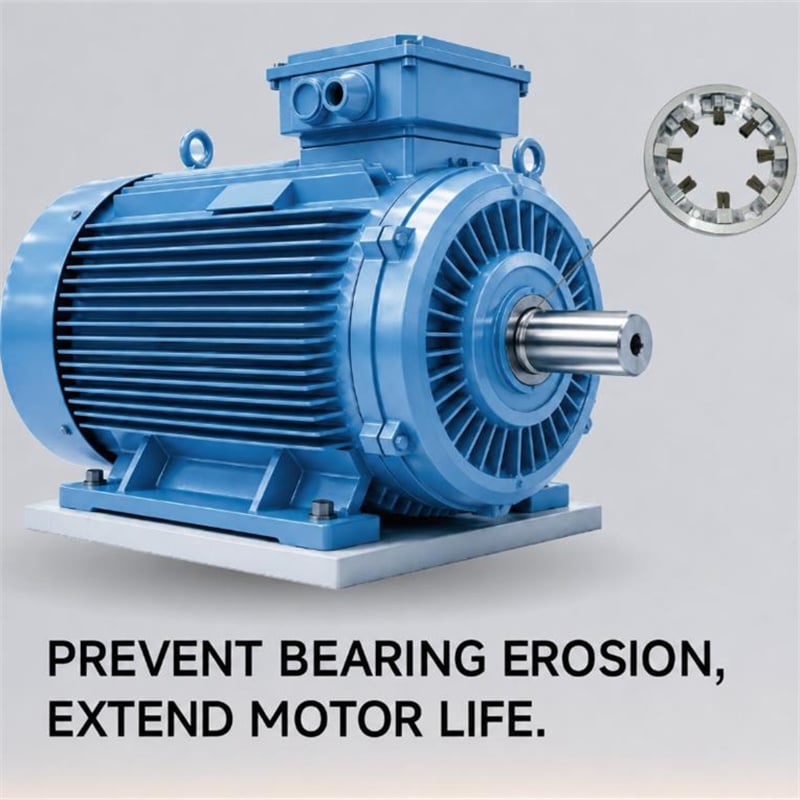
To effectively prevent shaft current damage, installing a shaft grounding ring is one of the most reliable and cost-effective solutions.
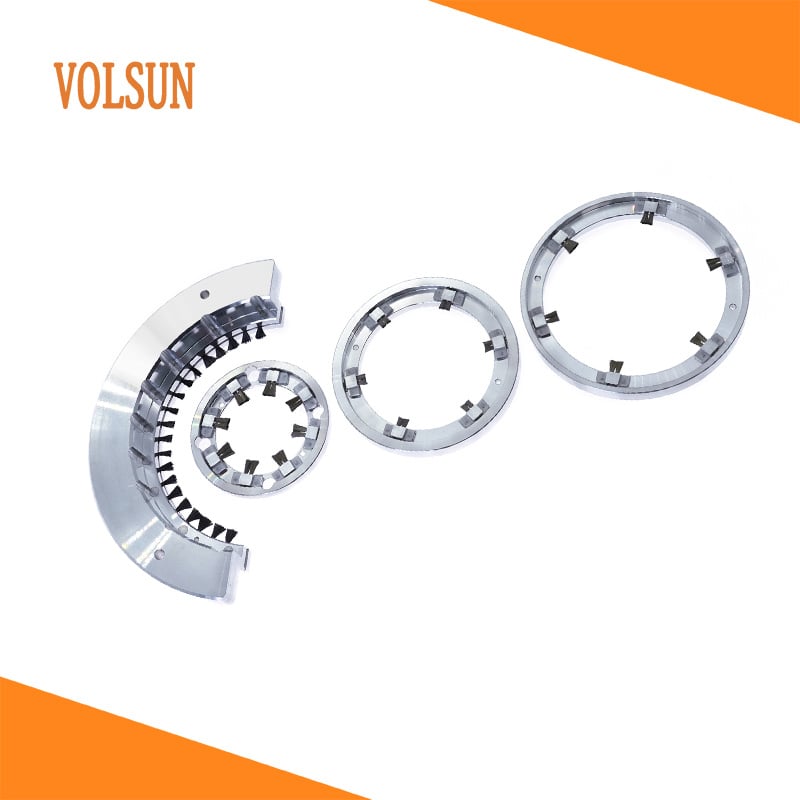
Volsun’s shaft grounding rings are designed to safely discharge harmful shaft voltages away from motor bearings by creating a low-resistance path to ground. Instead of allowing electrical current to pass through sensitive bearings, the current is redirected harmlessly through conductive microfibers.
Key Advantages of Volsun Shaft Grounding Rings
● Effectively protects motor bearings from electrical erosion
● Reduces downtime and maintenance costs
● Suitable for VFD and inverter-driven motors
● Stable performance in high-speed applications
● Available for EV motors, railway systems, industrial motors, and generators
● Flexible installation methods including press-fit and screw mounting
● Long service life and reliable conductivity
Volsun provides customized shaft grounding solutions for different motor structures and operating environments, helping customers improve equipment reliability and extend motor lifespan.
Protect Your Motors Before Damage Happens
Shaft current damage is often invisible in the early stages, but the long-term impact on motor performance can be significant. As modern motors increasingly rely on inverter technology, shaft grounding protection is becoming an essential part of motor system design.
If you are looking for a reliable way to protect your motors and reduce bearing failures, Volsun shaft grounding rings provide an efficient and proven solution for modern industrial applications.