 EN
EN


Осьдун жерге туташтыруу сакчысы: Мотордун подшипниктерин электрдик зыяндан коргоо ыкмасы
Электр моторлор жогорку тездикке, жогорку кубаттук тыгыздыгына жана озгоруучу жыштыктагы кыймылдаткычтарды (VFD) көбүрөөк колдонууга умтулууда, ось току жана подшипниктердин электрдик заары надеждун өсүп барган маанилүү маселелери болуп калып жатат.
Инверторлор тарабынан түзүлгөн жогорку жыштыктагы кернеу мотордун осунда тилеп турган эмес токту индукциялай алат. Эгер бул ток подшипниктер аркылуу өтсө, кайталанган электр разряды чекиттерди, канавкаларды, майлау затынын сапатынын төмөндөшүн жана подшипниктердин ирте сызылып кетишине алып келет.
А осьдун жерге кошулуу сакчысы (SGR) подшипниктер аркылуу өтпөсүн үчүн осьдун тогун жерге кошулганга чейин төмөн каршылыктуу жол менен багыттоо үчүн арнанган жолду камсыз кылат.
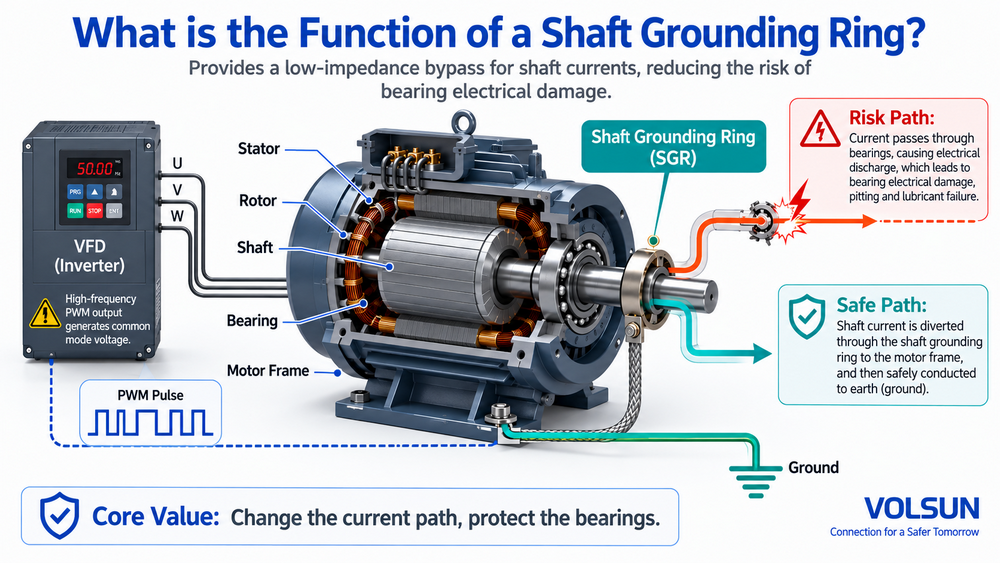
Осьдун жерге кошулуу сакчысынын функциясы кандай?
Осьдун жерге кошулуу сакчысынын негизги функциясы – тилебеген осьдун тогунун жолун өзгөртүү .
Инвертор менен иштеген мотордо PWM түзүлүштүн көчүрүлүшүнөн пайда болгон орточо кернеу мотордун валында электр потенциалын түзөт. Белгилүү иштөө шарттарында ток жерге жеткенче мотордун подшипниктери аркылуу өтүшү мүмкүн.
Бул зыяндуу ток жолун түзөт:
Вал → Подшипник → Мотордун каркасы → Жер
Валды жергө туташтыруучу сакчылык бурулушу альтернативалуу жол түзөт:
Вал → Валды жергө туташтыруучу сакчылык бурулушу → Мотордун каркасы → Жер
Контролдогон өткөрүүчү жолду түзүп, жергө туташтыруучу сакчылык бурулушу подшипниктерди электр тизмегинин бөлүгү болуп калышын токтотот.
Негизги баасы: Ток жолун өзгөртүңүз, подшипниктерди коргоңуз.
Бул принципп вальвулары жогорку жыштыктагы көчүрүлүшкө, жогорку айлануу тездигине же узак мөөнөттүү үзбөлгөсүз иштөөгө учурап калган моторлор үчүн айрыкча полездуу.
Неге валдын тогу мотордун подшипниктери үчүн көйгөй болот?
Мотордун подшипниктери механикалык жүктөрдү камтыйт жана тегиз айланууну камсыз кылат — алар электр тогун өткөрүүгө эмес.
Электр токтун чыгышы подшипник аркылуу кайталанганда, подшипниктин жолу жана ойногон бөлүктөрүндө микроскопиялык зыян пайда болушу мүмкүн. Узак мөөнөттө бул төмөнкүлөргө алып келүү мүмкүн:
· Электрдын тескери таасири жана жолдун оюлуп кетиши
· Майлаштыруучу суюктуктун сапатынын төмөндөшү
· Көбөйгөн кычырык жана титрөө
· Подшипниктин иштөө мөөнөтүнүн кыскартылыши
· Күтүлбөгөн техникалык кызмат көрсөтүү жана иштебей калуу
Бул риск айрыкча төмөнкүлөрдө маанилүү: VFD моторлору, жогорку ылдамдыктагы моторлор, EV ташыт моторлору жана башка заманбап электр жүрүштүрүү системалары .
Бул себептен, подшипникке зыян келтирилгенден кийин гана эмес, мотордун долбоорлоосунда жана системанын бириктирилишинде подшипникке каршы токтун коргоосу каралышы керек.
Осьтүн жерге туташтыруучу сактагыч кандай иштейт?
Осьтун токтун токтогон башкаруу сакчысы өзгөрүп турган ось менен электр байланышын сактоо үчүн өткөргүч элементтерди колдонот.
Эгер осьдөн токтун токтогону пайда болсо, өткөргүч сакчы ток үчүн төмөн каршылыктуу жолду камсыз кылат. Ток сакчы аркылуу чагылдырылат, мотордун каркасына өткөрүлөт жана андан кийин жерге кошулат.
Осьдүн жерге кошулуу чечиминын натыйжалуулугу жалгыз эле электр байланышын түзүүгө гана байланыштуу эмес. Бул факторлорго осьдүн диаметри, айлануу тездиги, байланыштын каршылыгы, орнотулган орду, мотордун конструкциясы, температура жана иштеп турган чөйрө да назар салынуу керек.
Туура проектирленген жерге кошулуу сакчысы узак мөөнөттүү мотор иштеп турганда надёждуу байланышты сактап, туруктуу электрдик иштешүүнү камсыз кылышы керек.
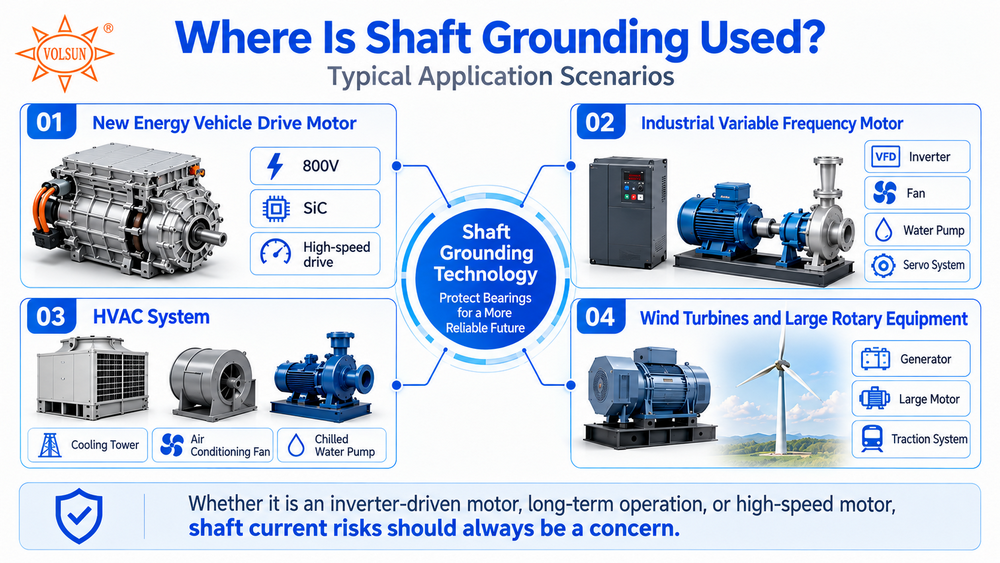
Осьдүн жерге кошулуу сакчылары кайда колдонулат?
Осьдүн жерге кошулуу технологиясы электр тогу подшипниктин надёждуулугуна таасир этэ турган ар кандай мотор жана айлануучу жабдууларга колдонулат.
Жаңы энергиялык транспорттун ташыт моторлору
Модерн ЭВ моторлору жогорку кернеш, жогорку ылдамдык жана чоң кубаттун тыгыздыгы 800 В архитектурасын, SiC күчтүү түзүлүштөрүн жана жогорку ылдамдыктагы моторлорду колдонгон системалар мотордун подшипниктери үчүн кыйын электр шарттарын түзүшү мүмкүн.
Осьтүн токко каршы сакталган башкаруу жолуна ээ болгон сактагыч орнотулушу осьтүн токтун негизгисине таасир этпей, подшипниктерди коргоого жардам берет.
Индустриялык VFD моторлору
VFD менен иштеген моторлор – осьтүн токко каршы сакталган башкаруу жолуна ээ болгон орнотулуштардын эң кеңири таралган колдонулуштарынын бири. Типтик жабдууларга төмөнкүлөр кирет:
· Индустриялык шамалдаткычтар
· Суу насостору
· Компрессорлор
· Транспортерлер
· Серво системалары
Айрым вал-токтун жолу үзгүлтүсүз иштегенде электрдык коррозиянын рискин төмөндөтүүгө жардам бере алат.
HVAC системалары
Заманбап HVAC системалары көпчүлүк учурда өзгөрмө-тездиктеги моторлорду, шамалдаткычтарды, насосторду жана компрессорлорду колдонот. Валдын токко каршы коргоо инвертор тарабынан чакырылган вал тогу маселеси болгондо мотордун коргоо стратегияларына киргизиле алат.
Шамал турбиндары жана чоң айлануучу жабдуулар
Шамал турбиндары, генераторлор, чоң моторлор жана башка айлануучу машиналар катуу шарттарда үзгүлтүсүз иштей алат.
Подшипниктерди электрдык зыяндан коргоо жабдуунун надеждүүлүгүн жогорулатууга жана плансыз техникалык кызмат көрсөтүүнү азайтууга жардам бере алат.
Валдын токко каршы коргоо чечимдери үчүн Volsun-ду неге тандайсыз?
Валдын токко каршы коргоо сакчысы кичинекей компонент болушу мүмкүн, бирок анын иштешүүсү мотордун подшипниктеринин надеждүүлүгүнө маанилүү таасир тийгизе алат.
Volsun баштоочу орунда турат колдонуу үчүн белгилүү валдын токко каршы коргоо чечимдери , продуктунун өнүктүрүлүшүн инженердик колдоо менен бириктирип.
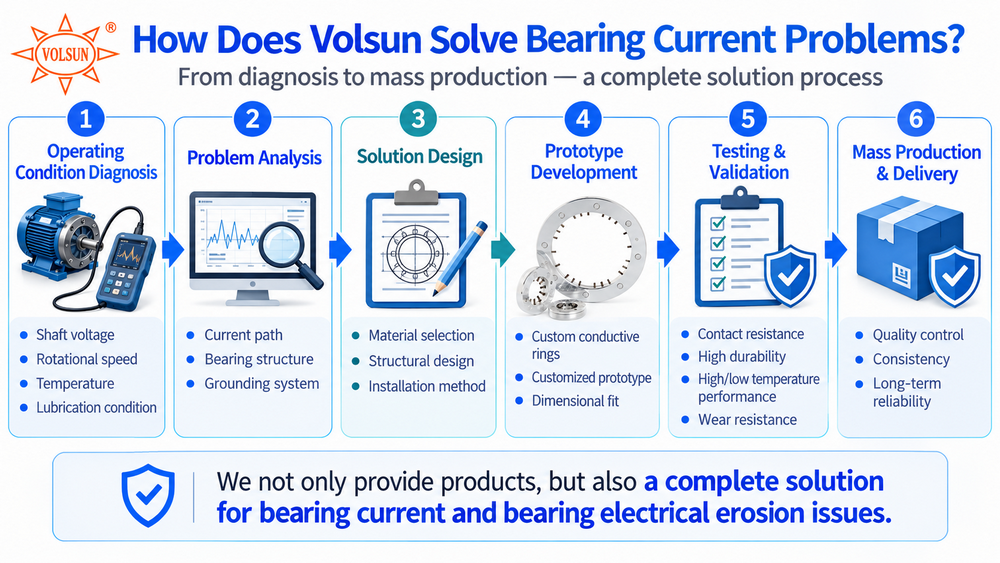
Биздин ыкма толук процессти камтыйт:
Иштөө шарттарын диагностикалоо → Проблеманы анализдөө → Чечимди долбоорлоо → Прототипти иштеп чыгаруу → Сыноо жана тастыктоо → Массалык өндүрүш
Бул, чыныгы мотордун колдонулушуна ылайык, баштапкы чечимди баалоого мүмкүндүк берет, бирок баштын диаметри гана эмес.
Учун Электр транспорттук каражаттардын моторлору, VFD моторлору, өнөрөс моторлору, HVAC жабдуулары, насостор, вентиляторлор, шамал турбиндары жана башка айлануучу машиналар , Volsun клиенттерге ыңгайлуу баштын жергэ туташуу чечимдерин иштеп чыгарууга жардам бере алат.
Токтун жолун көзөмөлдөп, подшипникти коргоо
Мотордун технологиясы үзгүлтүс түрдө өнүгүп барганда, подшипникке электрдик зыян келтирбөө мотордун надеждүүлүгүнүн бардык ылайыктуу бөлүгү болуп калып жатат.
А тамырдын Жерге Чейирүү Жогоркуу подшипниктерден тышкары токтун негизги жолун башка багытка өткөрүүгө практикалык мүмкүндүк түзөт.
Сиз кандайдыр бир маселени чечүүгө умтулсаңыз Электр транспорттук каражаттардын моторлорундагы подшипник тогу, VFD-дан пайда болгон баштагы ток же өнөрөс моторлорундагы электрдик коррозия , принциби жөнөкөй:
Таянычты ток өткөрүүчү жолго айлантып койбо.
Volsun Осьтүзгөн Токтун Жолун Өзгөртүүчү Бурулган Сактагыч — Таянычтарды коргоого жардам берүү үчүн Токтун Жолун Өзгөртүү.
Суроо-Жооп: Осьтүзгөн Токтун Жолун Өзгөртүүчү Бурулган Сактагыч
Мил үчүн жерге туташтыруу сақчасы деген эмне?
Осьтүзгөн Токтун Жолун Өзгөртүүчү Бурулган Сактагыч — башка токтун өтүшүнөн таянычтарды сактоого жардам берүү үчүн мотордун осьүнө же анын айланасына орнотулган өткөрүүчү түзүлүш.
Неге VFD моторлорго осьтүзгөн токтун жолун өзгөртүүчү бурулган сактагыч керек?
VFD’лер жогорку жыштыктагы PWM түзүлүштөрүн колдонот, алар жалпы режимдеги кернеэ жана осьтүзгөн токту чыгарып берет. Осьтүзгөн Токтун Жолун Өзгөртүүчү Бурулган Сактагыч бул ток үчүн альтернативдик жолду түзүп, таянычтарга электр тогу таасир этишинин рискин азайтат.
Осьтүзгөн Токтун Жолун Өзгөртүүчү Бурулган Сактагыч EV моторлорунда колдонулабы?
Ооба. Осьтүзгөн Токтун Жолун Өзгөртүүчү Бурулган Сактагычтар EV жана башка жогорку тездиктеги электр моторлорунда колдонулабы, анткени инверторго байланыштуу осьтүзгөн ток таянычтардын надеждүүлүгүн таасир этет.
Volsun өзгөчөлөндүрүлгөн Осьтүзгөн Токтун Жолун Өзгөртүүчү Бурулган Сактагычтарды сунуштабы?
Ооба. Volsun мотордун орнотулган жерин, караңгылыктын структурасын, орнотуу үчүн жетиштүү орунду, иштөө шарттарын жана башка колдонуу талаптарын эсепке алып, өзгөртүлгөн жерге туташтыруу сакчысынын чечимдерин иштеп чыга алат.
Караңгылыктын жерге туташтыруу сакчысын тандоодо кандай факторлорго көңүл бургуу керек?
Маанилүү факторлорго караңгылыктын диаметри, мотордун айлануу жыштыгы, иштөө температурасы, орнотуу орду, токтун көчүшүнүн каршылыгы, подшипниктин структурасы, жерге туташтыруу конфигурациясы жана күтүлгөн пайдалануу мөөнөтү кирет.