EN
EN


Is a 1.0 W/m·K Silicone Thermal Pad Enough for European ECU Thermal Management?
Customer Background (Europe Automotive Electronics)
A Tier-2 automotive electronics manufacturer in Europe specializes in producing ECUs (Electronic Control Units) for mid-range passenger vehicles.
Their products are widely used in:
- Engine control systems
- Body control modules (BCM)
- Communication sub-modules
- Engine control systems
- Body control modules (BCM)
- Communication sub-modules
Unlike high-power systems, many of their ECU designs prioritize stability, insulation, and cost control over extreme heat dissipation.
Application Parameters
In this project, the customer’s ECU structure featured:
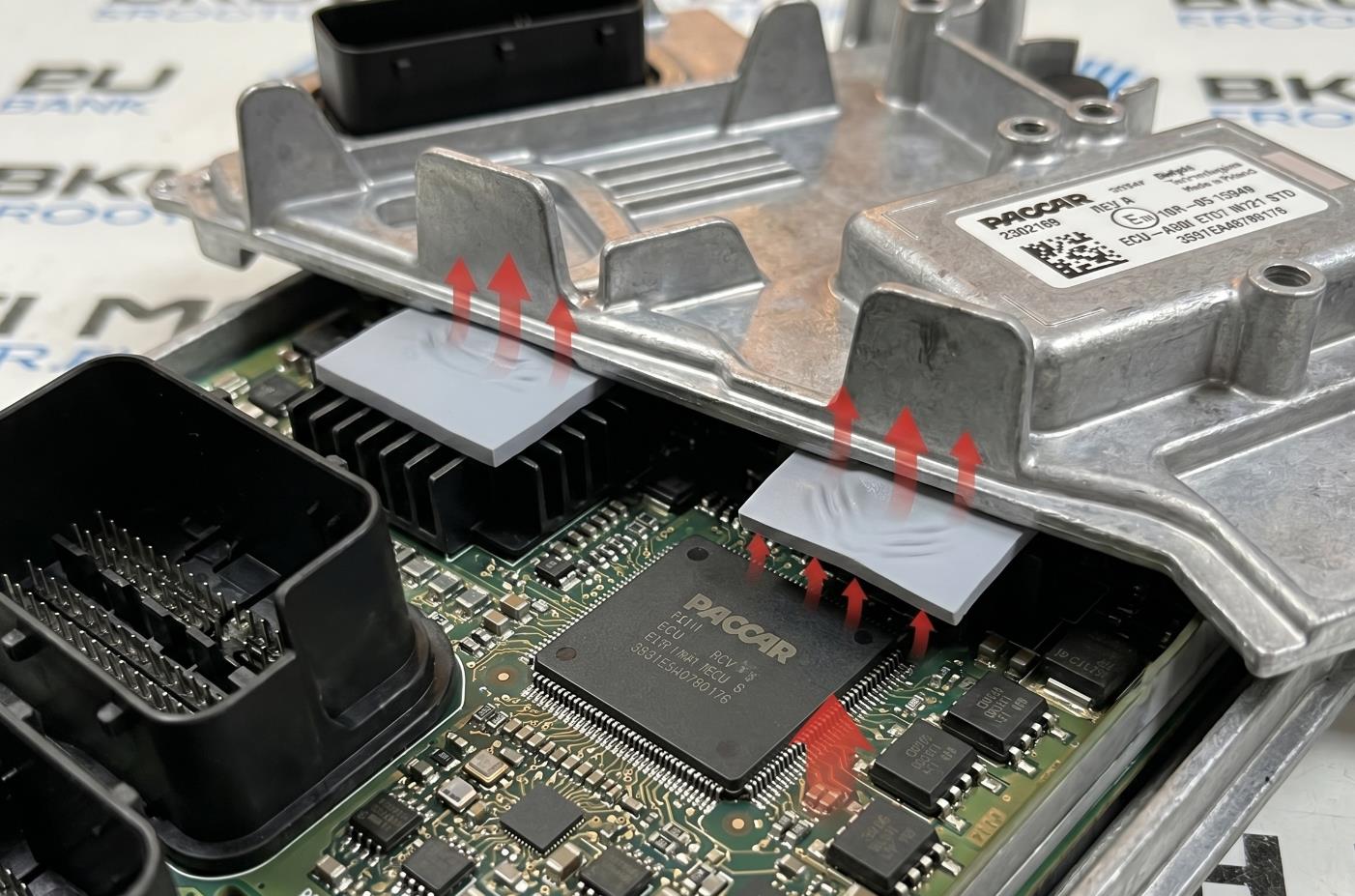
- Aluminum housing for passive cooling
- Multiple low-to-medium heat generating components
- Limited internal space with uneven mounting surfaces
Key technical requirements:
- Thermal conductivity: ≥ 1.0 W/m·K
- Electrical insulation: Required
- Thickness tolerance: High adaptability
- Compression: Soft and conformable
- Operating environment: Automotive-grade vibration and temperature cycling
Customer Pain Points
During initial sourcing, the customer faced several practical challenges:
- Over-specification: Many suppliers recommended 3–5 W/m·K pads, leading to unnecessary cost increases
- Poor gap filling: Rigid materials failed to compensate for assembly tolerances
- Insulation concerns: Some high-performance materials lacked stable dielectric properties
- Cost pressure: Large-volume production required a more economical solution
The key question became:
Is high thermal conductivity really necessary for all ECU positions?
Competitive Options in the Market
Typical alternatives the customer considered included:
- High thermal conductivity pads (3–6 W/m·K)
- Thermal grease or phase change materials
- Lower-cost but low-quality silicone pads
However, each option had trade-offs:
- High W/m·K → High cost, often over-engineered
- Grease/PCM → Messy application, poor long-term stability
- Low-end pads → Inconsistent quality, unreliable insulation
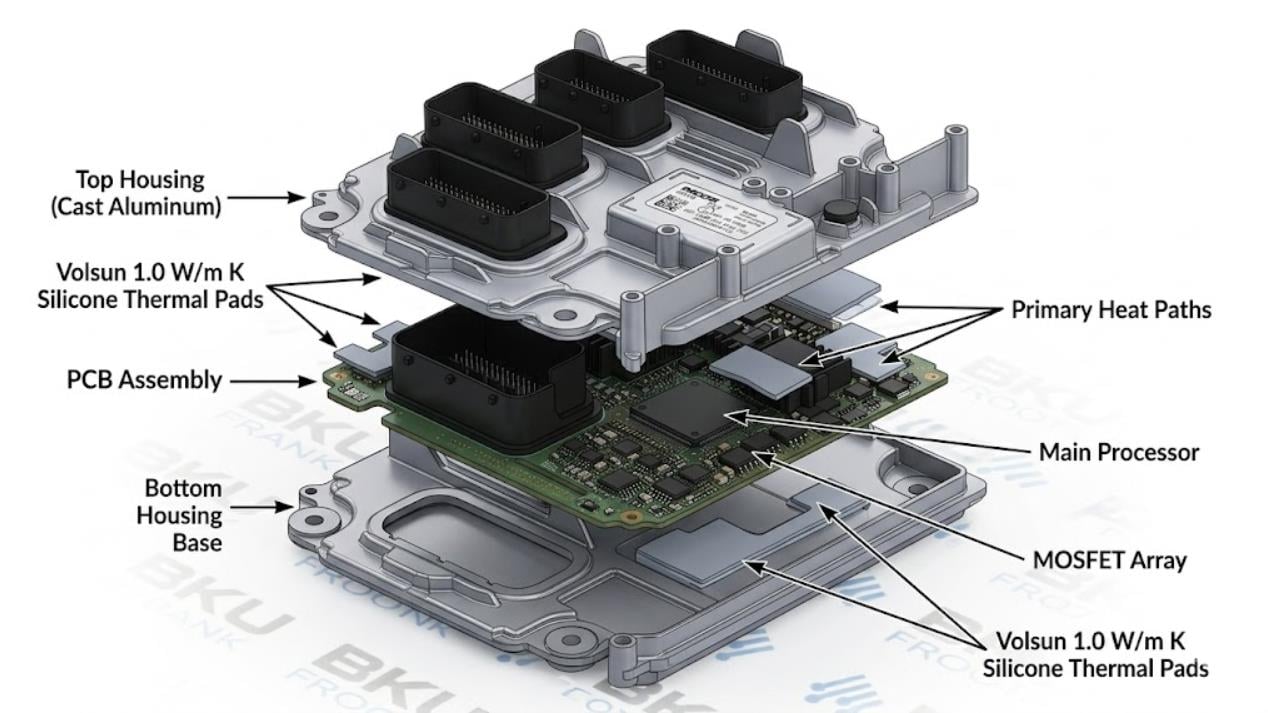
Volsun Solution
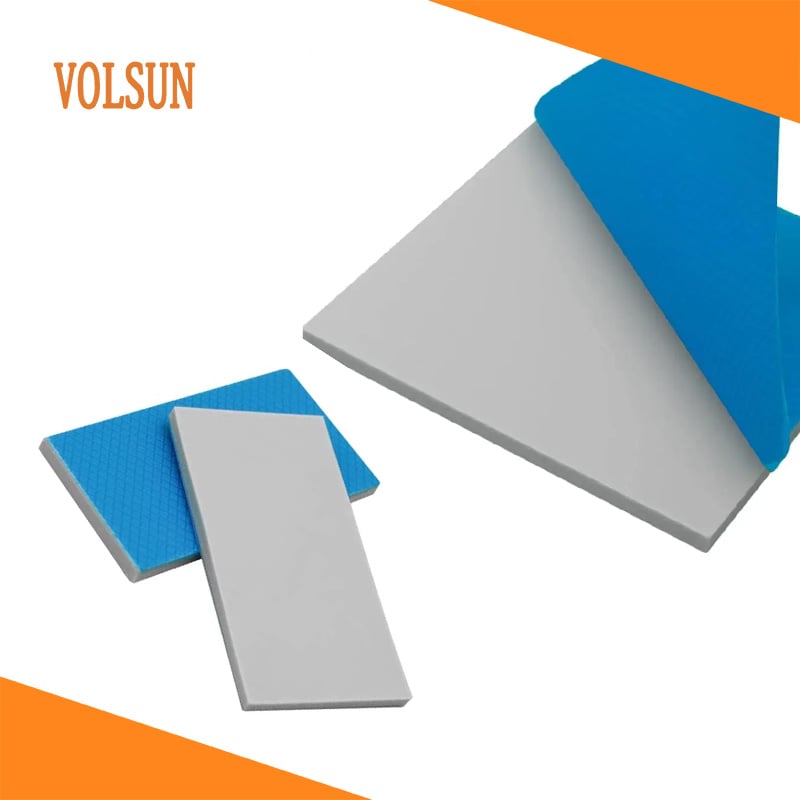
Volsun recommended a 1.0 W/m·K silicone thermal pad, specifically designed for:
- General-purpose thermal management
- Electrical insulation scenarios
- Gap filling and vibration buffering
Instead of chasing peak performance, the solution focused on “fit-for-purpose thermal design.”
Application Result
After implementing the 1.0 W/m·K silicone thermal pad, the customer achieved stable and reliable thermal performance across key ECU positions, with component temperatures maintained within design limits. The material’s softness improved assembly consistency by effectively compensating for surface irregularities and tolerances. At the same time, it helped reduce overall material costs by approximately 20–30%, while maintaining long-term reliability under vibration and temperature cycling conditions.
Industry Expansion
This 1.0 W/m·K silicone thermal pad is also well-suited for a variety of applications beyond automotive ECUs, particularly where moderate heat dissipation is sufficient. It is widely used in industrial control systems, power modules, LED drivers, and communication equipment, where insulation, gap filling, and cost efficiency are equally important. For products requiring stable performance in large-scale production, it provides a practical and economical thermal management solution.
Looking for a cost-effective and reliable thermal interface solution for your application?
Volsun offers:
- Customized thickness, hardness, and size
- Automotive-grade material options
- Stable supply for mass production
Contact Volsun today to get application-specific recommendations and free samples.