 EN
EN


How to Achieve Low Interfacial Thermal Resistance: A Deep Dive into Volsun 6.0 W/m·k Thermal Pads
In the world of modern electronics, power devices are shrinking while their heat outputs are skyrocketing. For design engineers and procurement professionals, keeping these components cool is no longer just about picking a standard heat sink. The real battlefront for heat dissipation happens at the microscopic level: the interface between the heat source and the cooling element. This is where interfacial thermal resistance becomes either your biggest bottleneck or your secret weapon.
The Invisible Enemy: Interfacial Thermal Resistance
When you look at a polished metal cooling sheet or a power device chassis under a microscope, the surfaces are not perfectly flat. They are filled with microscopic peaks and valleys. When these two surfaces are pressed together, they only touch at a few high points. The rest of the space is filled with microscopic pockets of air.
Because air is a terrible conductor of heat, these tiny air gaps act as an insulation barrier, creating high interfacial thermal resistance. No matter how powerful your aluminum heat sink is, the heat cannot efficiently transfer out if it gets trapped at this joint. To eliminate this invisible enemy, you need an interface material that can completely push out the air and create a seamless thermal bridge.
Achieving low interfacial thermal resistance requires a material that balances two critical physical properties: surface wettability and resilience.
● Surface Wettability: This is a material's ability to "wet" a solid surface, allowing it to conform intimately to microscopic roughness even under relatively low mounting pressures.
● Resilience: The material must maintain internal flexibility to absorb mechanical tolerances, vibration, and structural shifts over time without losing contact or cracking.
When a thermal material combines high surface compliance with elite material integrity, it fills every micro-void, drastically lowering thermal resistance and ensuring safe, reliable operation for years.
Introducing the 6.0 W/m·k High-Performance Solution
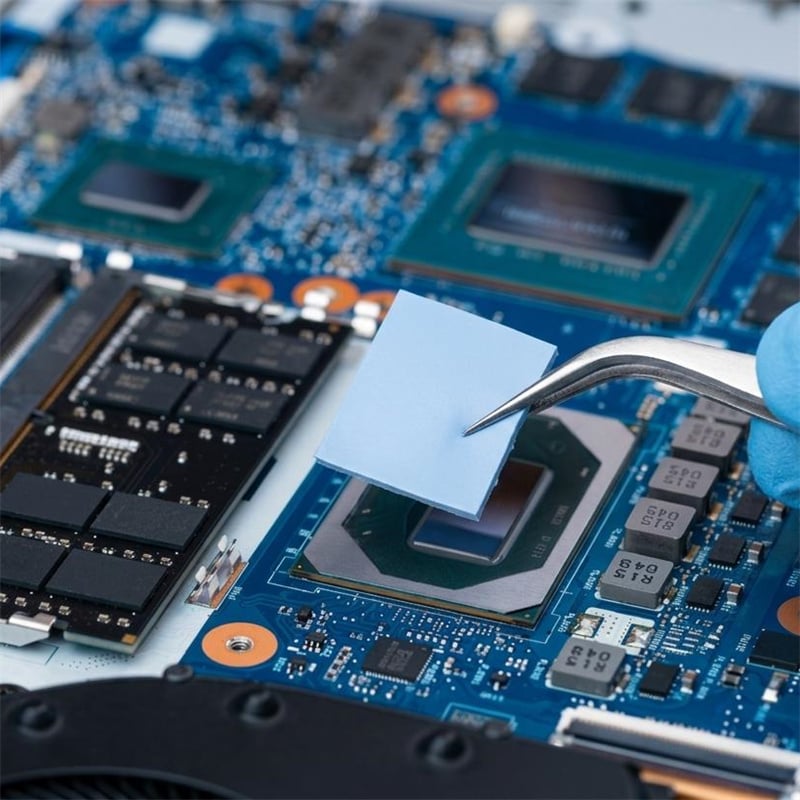
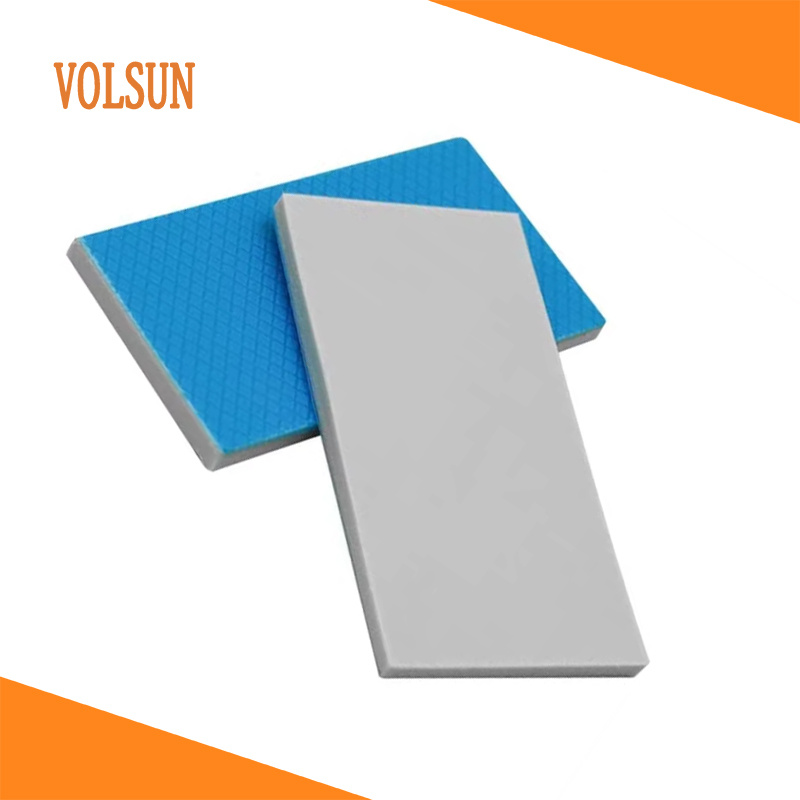
To meet these strict industrial demands, Volsun engineered the VS-GP6001 Silicone Thermal Pad. Designed specifically for high-heat environments, this solid sheet material achieves an impressive thermal conductivity of 6.0 W/m·k.
What sets the VS-GP6001 apart is its ability to deliver ultra-low interfacial thermal resistance at exceptionally low pressures. It flows smoothly into microscopic surface imperfections while maintaining excellent resilience. With a soft hardness rating of 45-70 Shore oo, it acts as a gentle, stress-absorbing cushion for fragile components.
Beyond its thermal traits, it serves as a robust electrical insulator, featuring a dielectric breakdown voltage of >6kV and a volume resistivity of 1.0 x 10¹² Ω·cm. It is built to withstand extreme environments, operating reliably from -40C up to +200C. Safety and compliance are guaranteed, as the entire series achieves a UL94 V-0 flame rating and complies fully with RoHS and REACH standards.
Where It Matters Most
The high thermal ceiling of a 6.0 W/m·k pad is widely used between high-power semiconductor devices and cooling plates, in automotive electronic control units (ECUs), and within complex lithium battery packs where keeping temperatures uniform is vital for safety.
Take Your Thermal Design to the Next Level
Lowering interfacial thermal resistance does not require massive clamping forces that risk damaging your PCBs. By selecting a material engineered for superior surface adaptation and high thermal conductivity, you can optimize your cooling system effortlessly.
Contact the Volsun technical team today to request a standard 235mm x 235mm sample or to discuss custom die-cut dimensions tailored perfectly to your application.