 EN


High-Temperature Fiberglass Sleeving for Automotive Oxygen Sensor Wiring Harnesses
Protecting Wiring Harnesses in High-Temperature Exhaust Environments
Automotive wiring harnesses routed near engine exhaust systems must withstand demanding thermal and mechanical conditions. Oxygen sensor wiring is a typical example. Located near exhaust manifolds and catalytic converters, these wiring harnesses may be exposed to elevated temperatures, continuous vibration, abrasion, and repeated thermal cycling.
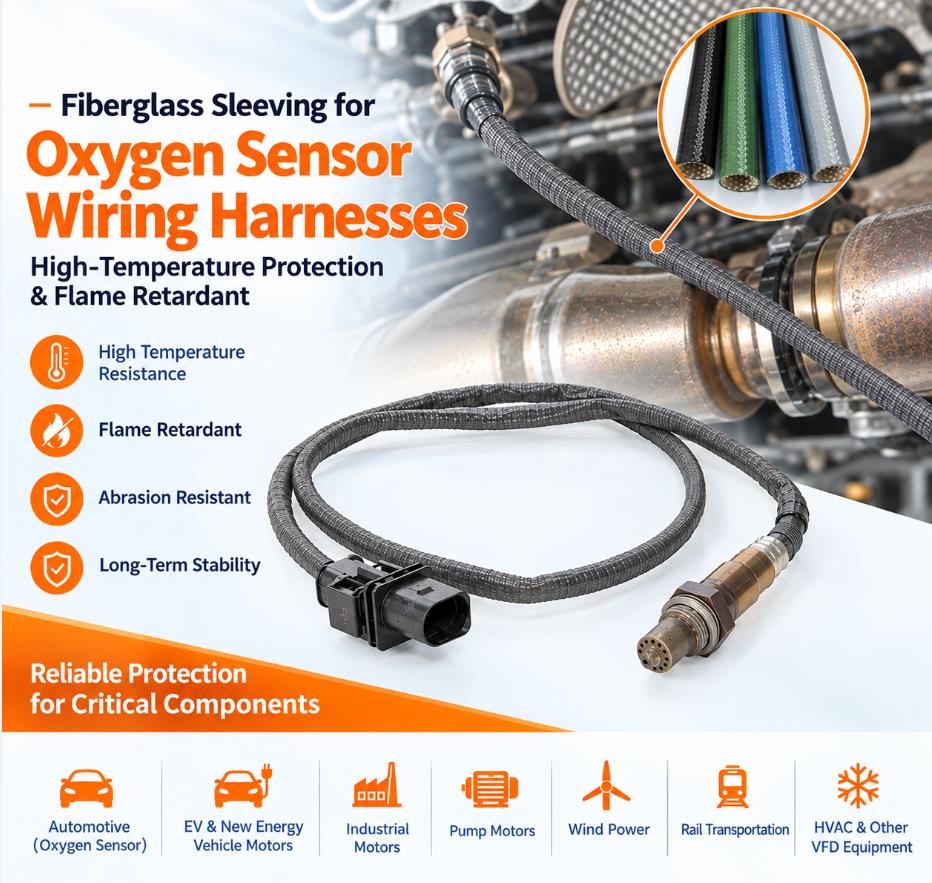
Understanding Automotive Oxygen Sensor Wiring Harnesses
An oxygen sensor, also known as an Oxygen sensor or lambda sensor, measures the oxygen content in engine exhaust gases and sends signals to the engine control unit (ECU). These signals help the engine management system regulate the air-fuel ratio and monitor catalytic converter performance.
Depending on the vehicle design, upstream oxygen sensors are typically installed before the catalytic converter, while downstream sensors are generally positioned after it. Their wiring harnesses connect the sensors to the vehicle's electrical system and must maintain reliable signal transmission under demanding operating conditions.
Fiberglass sleeving is therefore worth considering as part of a comprehensive wiring protection design.
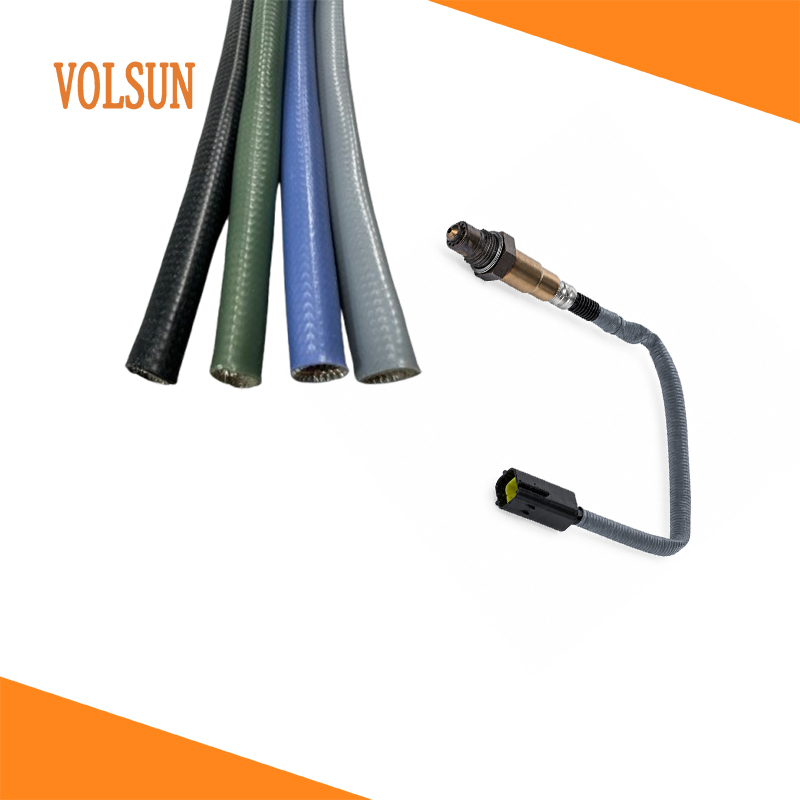
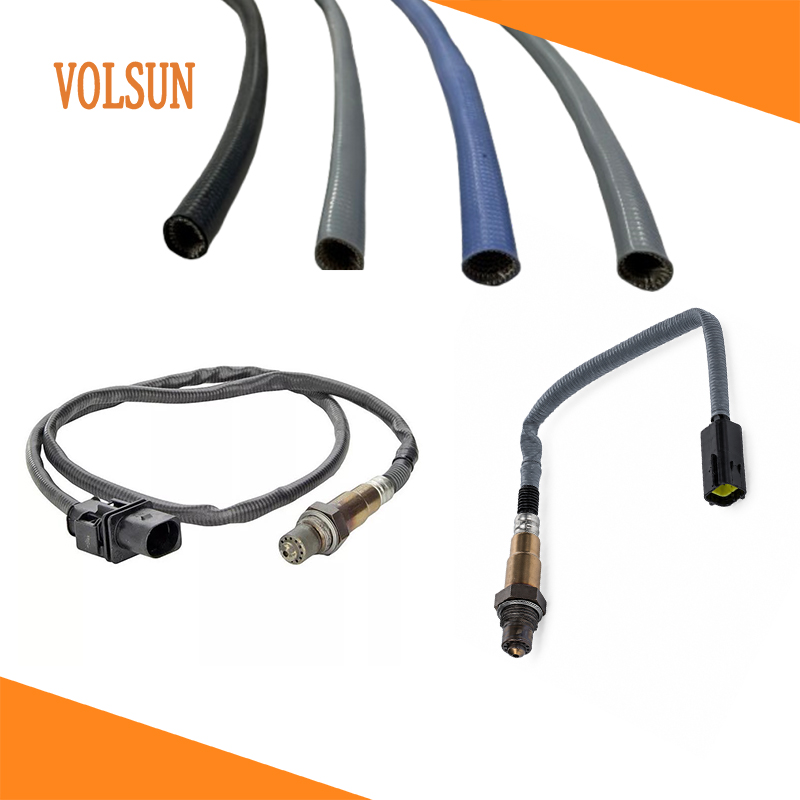
How Fiberglass Sleeving Helps Protect Oxygen Sensor Wiring
1. Additional Thermal Protection
High-temperature fiberglass sleeving is designed to withstand elevated temperatures according to its material construction and specified temperature rating. When installed over suitable wiring, it provides an additional protective barrier against thermal exposure.
For oxygen sensor harnesses routed near exhaust components, this additional protection can help reduce direct exposure of the underlying wire insulation to heat and support its long-term integrity.
2. Abrasion and Mechanical Protection
Oxygen sensor wiring may pass close to mounting brackets, metal edges, and other engine compartment components. Vehicle vibration and repeated movement can cause friction, gradually wearing down exposed wire insulation.
The fiberglass reinforcement and silicone rubber coating can help protect the harness against everyday mechanical contact and abrasion, depending on the specific construction and test performance of the sleeving.
3. Supplementary Electrical Insulation
Silicone rubber coated fiberglass sleeving can provide supplementary electrical insulation around a wire harness. This additional layer can help separate protected wiring from surrounding components and contribute to the overall insulation design.
For automotive applications, the required dielectric performance, temperature resistance, and compatibility with the existing wire insulation should be evaluated against the relevant design specifications.
4. Improved Harness Organization and Assembly
Fiberglass sleeving can also help group and protect multiple sensor leads within a defined routing path. By covering exposed wire sections, it can contribute to a neater harness arrangement and simplify handling during assembly.
The appropriate sleeving size and installation method should be selected according to the harness diameter, connector geometry, routing requirements, and available installation space.
Why Choose Silicone Rubber Coated Fiberglass Sleeving?
The combination of fiberglass reinforcement and silicone rubber coating is useful when wiring protection requires both thermal resistance and a flexible outer protective layer.
Depending on the selected specification, this type of sleeving may support:
· High-temperature resistance: Helps protect wiring in elevated-temperature environments within the specified operating limits.
· Mechanical protection: Provides an additional barrier against abrasion and contact with surrounding components.
· Electrical insulation: Adds supplementary insulation when validated for the intended application.
· Flexible installation: Accommodates suitable harness routing and assembly requirements.
· Application-specific customization: Available dimensions, colors, cut lengths, and packaging can be discussed according to project requirements.
VOLSUN Fiberglass Sleeving for Automotive Applications
VOLSUN develops silicone rubber coated fiberglass sleeving for wire and cable protection in demanding industrial and electrical environments. For automotive oxygen sensor wiring harnesses, the material can be evaluated as an additional protective layer for wire sections exposed to heat, abrasion, and mechanical contact.
Looking for high-temperature fiberglass sleeving for automotive wiring harnesses? Contact VOLSUN to discuss your application and customization requirements.